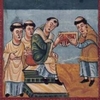
Diuisus est autem trifarie,
e quibus una pars Asia,
altera Europa,
tertia Affrica
nuncupatur, |
divisus est [orbis]
e quibus [partibus tribus] una pars [nuncupatur] Asia
altera pars [nuncupatur] Europa |
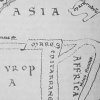 |
what are the three parts of the world called? |
quas tres partes orbis
ueteres
non aequaliter diuiserunt. |
diviserunt: s.v. divido |
| |
are the three parts of the world divided equally? |
Nam Asia a meridie
per orientem
usque septentrionem peruenit. |
orientem: s.v. oriens [orior] |
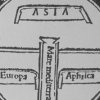 |
what part of the world does Asia occupy? |
| Europa uero a septentrione
usque ad occidentem,
atque Affrica ab occidente
usque ad meridiem. |
occidentem: s.v. occidens [occido] |
 |
what part of the world does Europe occupy? what part of the world
does Africa occupy? |
Vnde evidenter
orbem dimidium
duae tenent,
Europa et Affrica. |
duae [partes] |
 |
how much of the world is occupied by Europe and Africa? |
Alium uero dimidium
sola Asia, |
sola Asia [tenet] |
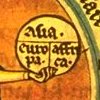 |
how much of the world is occupied by Asia? |
sed ideo
istae duae partes
factae sunt,
quia inter utrasque
ab oceano
mare magnum ingreditur
quod eas intersecat. |
inter utrasque = inter utrasque partes |
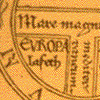 |
what divides the two halves of the world? |
Quapropter si
in duas partes
orientis et occidentis
orbem diuidas,
Asia erit in una,
in altera uero
Europa et Affrica. |
Europea et Affrica [erunt] |
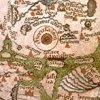 |
what is found in the eastern half of the world? what is found
in the western half? |
Istae tres partes
totum humanum genus
cum insulis
quae his adiacent
continent. |
quae his [partibus] adiacent |
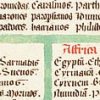 |
where does the human race reside? |
Et bene tribus partibus
distinctus est orbis,
qui sanctae trinitatis fide
imbuendus erat, |
tribus: s.v. tres |
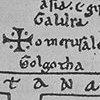 |
why does Hrabanus think the world has been divided into three
parts? |
et euangelico documento
instruendus,
unde legitur
in parabola saluatoris
quod mulier
acceptum fermentum
abscondit in farina
satis tribus,
donec fermentaretur totum, |
documentum: this word does not just mean "document"
parabola salvatoris = parabola Christi
mulier accepit fermentum et eum abscondit (passive participle)
satis: s.v. satum (= Hebrew saton)
(you read this parable
earlier in the semester) |
| |
Hrabanus now provides an allegorical interpretation of the parable
of the yeast, based on this geography: the woman took the yeast and divided
it into three measures of flour |
id est sancta ecclesia
humano generi
(quod ex tribus filiis Noe
seminatum in mundo fuit) |
santa ecclesia = mulier; farina = genus humanum |
| |
in other words: the holy Church took the yeast and divided it
into the three measures of the human race. how did it happen that the human
race equals three measures? |
fermentum euangelicae doctrinae
in cordibus fidelium
abscondit |
Noe: genitive singular (Hebrew names usually don't decline)
cordibus: s.v. cor
fidelium: s.v. fidelis |
| |
Hrabanus then interprets the yeast to be the yeast of the Gospel;
the woman hides the yeast of the gospel in the hearts of the faithful |
donec
natiuum saporem totum
perfectam fidem
et scientiam spiritalem
conuerteret
in cultum et seruitium dei. |
saporem... fidem et scientiam: apposition |
| |
what change does the "yeast" of Gospel bring about in
the "flour" of humanity? |